
What Is the Importance of Respect and Etiquette in Martial Arts?
At the core of every martial arts discipline, from Karate to Taekwondo, lies a deep-seated tradition of respect and etiquette. These aren’t just rules to follow; they shape the very essence of martial arts culture. By embracing these values, practitioners don’t just learn how to throw punches or execute kicks; they learn how to carry themselves with dignity and treat others with honor. This blog explores the fundamental roles of respect and etiquette in martial arts, illustrating why they’re as crucial as the physical skills taught.
The Bow: A Gesture of Mutual Respect
The bow to the mat or the sparring area is almost like an unspoken sentence. Such a simple nod gesture often remains unnoticed as the beginning of respect in martial arts. It is more than acknowledging the opponent; it is silently promising a performance with integrity. It is like the handshake before the business deal, setting the preconception for what is to follow. It affirms mutual respect and willingness to learn, reminding all parties that they belong to a tradition with greater value on dignity than on mere triumph.
Etiquette in Learning: The Student-Instructor
Relationship In martial arts, the relationship between a student and their instructor is respected. This bond is established through etiquette. Students respect by paying attention and adhering strictly to the instructions, not to outdo but to respect the knowledge of yore. For teachers, it is giving everybody what is needed to succeed- not just in the dojo but also in life- which forms a dynamic of mutual respect that creates learning and development, setting the groundwork beyond techniques.
Discipline: The Spine of Practice
Discipline is the very spine of martial arts, which profoundly resides in respect. Why do martial artists train through such grueling routines? It is far from a simple matter of physical strength; it is a way of developing one’s mind into discipline. Each repetitive drill and practice session is like a lesson in being persistent or showing respect for the process- the lesson that no promptness can supersede the power of patience. This disciplined attitude is a martial aspect of a person’s character and, as such, allows them to stand tall through life’s tests.
Sparring with Respect: Learning Control and Modesty
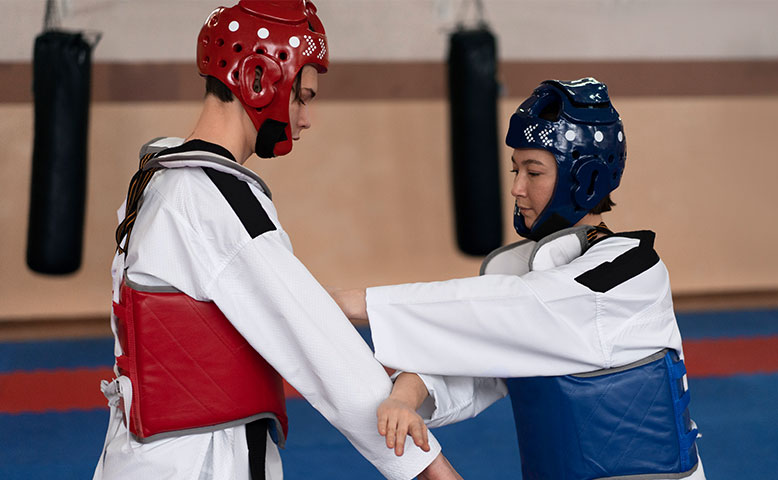
Sparring is not a brawl but rather a dialogue expressed through movements and a test of skill and control. Respect shines through here. Practitioners learn to hit not out of hate but as a test for themselves and the opponent. This controlled environment fosters humility, and it is recognized that there is more to be learned. It trains practitioners to respect the journey ahead of the win and acknowledge how vital respect and control are in each relationship.
Attire and Appearance: Wearing Your Values
Ever notice the impeccable uniforms that martial artists wear? They are more than just an outfit; they testify to a practitioner’s commitment and respect for their art. Taking care of the uniform and putting it on properly is a personal respect that extends to the dojo, indicating being ready to learn and respect traditions. The outer presentation reveals an inner commitment toward martial arts culture, which manifests directly in professionalism and respect for the members who practice them.
Respect Beyond the Dojo: Reaching Beyond the Walls
The respect the martial arts learner takes home during practice will transcend the dojo walls. It creates respect in everyday life, teaching practitioners to handle their differences with composure and to see the world with a practical sense of respect for others wherever they are. It is about taking lessons learned in the dojo into the real world. The practice of respect enlists martial artists as contributing actors of peace- and understanding-promoting roles in their communities, illustrating how lessons learned in the dojo can have real-life consequences.
Reflection and Growth: The Art of Self-Cultivation
Lastly, martial arts encourages reflection, which plays an important role in development in any field of life. By reflecting on one’s improvement and setbacks, the respectful critique from instructors and fellow learners makes this a behavioral epitome for constantly acting towards further personal growth as a person of skills and character. It instills in the mind a spirit of continuous improvement, humility, and self-awareness, the keys to one’s development and mastery of the art.
Conclusion
Respect and etiquette are not merely part of the curriculum in martial arts; they are vital lessons that extend into every area of life. By integrating these principles, martial artists gain physical strength and profound wisdom that guides their interactions with others. Whether in the dojo, at home, or in a professional setting, the values of martial arts enhance personal development and foster a respectful, disciplined approach to life’s challenges. Embracing these values fully means embodying the true spirit of martial arts, making it a transformative journey of both body and mind.